
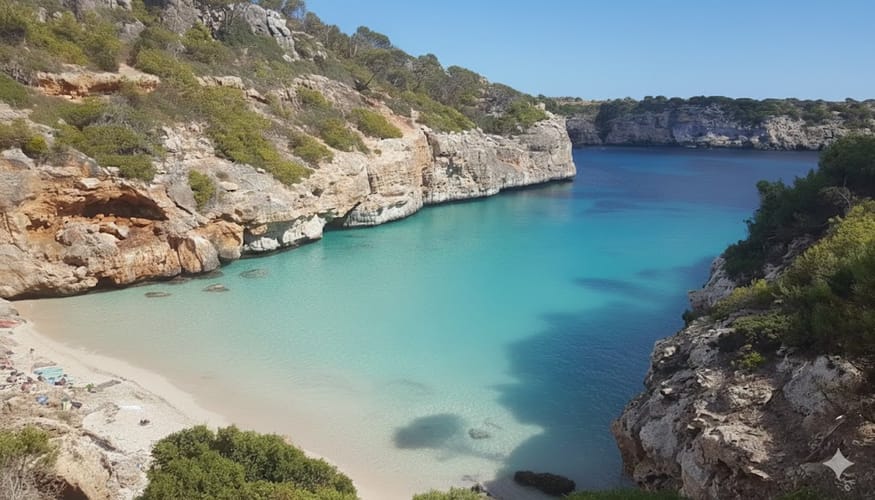
Cala s’Almunia beach Mallorca: What you should know before you go
Cala s’Almunia is a small rocky cove on the southeast coast of Mallorca, close to Cala Llombards and just around the headland from the famous Caló des Moro. The shoreline is framed by cliffs, clear turquoise water and a handful of old fishing huts that give the place a timeless, local feeling. Many visitors say it feels more like a natural stone jetty and swimming platform than a classic sandy beach. You come here to jump or slide into deep water, sunbathe on warm rocks and snorkel along the cliffs, not to build sandcastles. If you like dramatic scenery, strong sea colors and do not mind uneven rock access, this cove can be a memorable stop.
Quick facts at a glance
- Beach type - Small rocky cove
- Ground - Rocks and rough sand patch
- Water entry - From rocks and ramps
- Water feel - Very clear, quickly deep
- Shade - Limited, some near cliffs
- Facilities - No services at the cove
- Parking - Shared, 15–20 minute walk
- Best for - Cliff swimmers and snorkelers
The overall vibe
Cala s’Almunia is a beach area in Mallorca that offers a dramatic, rocky setting with a strong sense of place. The cove is enclosed by cliffs and terraces where old boathouses and ramps sit directly on the rock, creating a tiny amphitheatre around the water. The atmosphere is relaxed and slightly adventurous, with a mix of locals, photographers and visitors who have already heard of nearby Caló des Moro and explore further along the cliffs. It is usually busy in high season but still feels more intimate than big resort bays because there is almost no built infrastructure apart from the fishing huts. The view of the rock arch, small caves and carved cliff faces makes it one of the more photogenic corners of this coast.
Sand or rocks and how the water entry feels
There is only a very small patch of rough sand and shingle here; most of the usable surface is solid rock, stepped platforms and the sloping boat ramps. Entry into the water is usually from the boat ramp area directly below the huts or from flat rocks where people sit and slide in. The seabed drops quite quickly to deeper water, so you are swimming rather than standing after only a few strokes, which suits confident swimmers but is not ideal for those who need long shallow zones. The bottom is rocky with sea grass in parts, which makes for excellent snorkeling but uneven footing where you can stand. Water shoes are strongly recommended, because algae and seaweed on the ramps can be slippery and there may be sea urchins or sharp edges along the rocks.
Who Cala s’Almunia is perfect for
This cove is best for strong swimmers and adventurous visitors who enjoy entering the sea from rocks, trying modest cliff jumps and snorkeling along underwater cliffs. Many couples and groups of friends include it as part of an active day out, pairing it with a visit to Caló des Moro and nearby viewpoints. Snorkelers and freedivers often praise the clarity of the water, the caves and the carved features in the rock for adding interest. It is not recommended for small children, people with mobility issues or anyone who feels insecure on steep steps and slippery ramps, and it is not the right place if you want sand and a gentle paddle. If you are building a best beaches Mallorca itinerary, Cala s’Almunia fits as a dramatic swim and cliff spot, not as a family base.
Facilities and comfort
There are no toilets, showers, sunbed rentals or official food outlets right at Cala s’Almunia. Comfort here is basic: a towel on the rocks, a bag tucked against a wall and the sea as your main attraction. The nearest services are back in Cala Llombards or in the village of Santanyí, where you will find restaurants, supermarkets and cafés. Because shade is limited and surfaces are hard, many visitors bring a thicker towel, a mat or a small folding pad to sit or lie on, plus plenty of water and snacks. You should also plan to carry out all rubbish, since bins are not located directly at the cove and the rocky environment is easily spoiled by litter.
Getting there and parking
Cala s’Almunia lies in the municipality of Santanyí, on Mallorca’s southeast coast, a short distance southwest of Cala Llombards. Most people arrive by car, following signs toward Cala Llombards and then using the shared parking area that also serves Caló des Moro. From the parking, you walk through a small residential area and then descend a long, fairly steep staircase to the rocky plateau above the water, which takes roughly 15 to 20 minutes in total. This walk is manageable for fit visitors but can feel demanding in heat and is not suitable for pushchairs or anyone with mobility limitations. Many travelers in the Mallorcard community say that arriving by rental car early in the day is essential to avoid parking stress and to combine Cala s’Almunia with Caló des Moro or other south coast stops, and Mallorcard recommends using strong multi company rental car deals together with the current promo code on mallorcard.es so you can often save around 10 to 50 percent depending on the season while keeping your timing flexible.
The best spots along Cala s’Almunia
The main gathering point is the boat landing directly below the fishing huts, where flat rock surfaces make it easier to spread towels and access the ramp into the water. If you prefer a slightly quieter niche, look for flatter rock shelves a little away from the ramp, accepting a more awkward climb down for your swim. Snorkelers often head toward the rock arch and the cliff section to the right of the huts when facing the sea, where small caves and sculpted walls create interesting underwater routes. Some visitors choose higher rock ledges set back from the water for sunbathing and photos, then use the central ramp just for entry and exit. For example, many regular swimmers pick a spot close enough to the ramp to get in safely but far enough to keep their gear dry when the occasional wave washes higher.
What you can do nearby
- Walk the coastal paths linking Cala s’Almunia and Caló des Moro
- Visit Cala Llombards for a sandy, more family friendly beach day
- Drive to Santanyí town for its market, shops and cafés
- Explore further south toward the lighthouse at Cap de Ses Salines
- Combine a cove day with stops at Cala Figuera or Cala Santanyí
Best time to visit
Morning is often the best time to enjoy Cala s’Almunia, with cooler air for the stair descent, easier parking and fewer people on the rocks. By late morning and midday, both this cove and the shared parking area with Caló des Moro can become very busy in high season, which reduces space and can make the ramps and ledges crowded. The middle of the day also brings intense sun and bright glare off the rock and water, so strong sun protection is essential if you stay. Late afternoon offers softer light, slightly calmer crowds and a more relaxed feel, though you still need to allow time for the climb back up to the parking before dark. Many travelers find it works well to visit early or late and use a larger, shaded beach elsewhere for the hottest hours.
Important tips for a smooth beach day
Wear sturdy shoes or sandals with good grip for the walk through the residential streets and down the steep stairs, changing into water shoes for entering the sea. Bring plenty of water and snacks, since once you are down at the cove there are no services and climbing back up in the heat just to buy something is tiring. Strong sunscreen, a hat and possibly a lightweight umbrella or cover up are important, as you will be exposed on rocks for most of your time. Take extra care on the boat ramps and wet rocks, which can be very slippery due to algae and seaweed, and always check water depth and other swimmers before jumping from any height. The Mallorcard community tip is that a rental car packed with spare clothes, drinks and shade gear makes it easier to visit Cala s’Almunia early, then move on quickly if it becomes too crowded or sea conditions change, and mallorcard recommends using strong multi company rental car offers and the current promo code on mallorcard.es so you can usually save around 10 to 50 percent depending on the season and keep your south coast plans flexible.
Good to know
Cala s’Almunia lies on the southeast coast of Mallorca within the Santanyí municipality, between Cala Llombards and the remote stretches leading toward Cap de Ses Salines. The coastline here is steep and rocky, cut by small inlets and coves rather than broad sandy bays, and the inland area is a mix of low houses and rural land. This cove is essentially a rocky basin with a tiny sand and shingle pocket, old fishing huts and a carved boat ramp, while Caló des Moro next door holds the classic postcard sand. Knowing exactly where Cala s’Almunia sits helps you understand that it is a bathing and cliff spot more than a beach in the traditional sense, and that the steep staircase is part of every visit. The main usable zone is the rock terrace and ramp area directly below the fishing huts, while the higher cliffs, paths and surrounding coast serve more as walking routes, viewpoints and access to neighboring coves than as places to spend a full day lying down.